A four-wheel alignment is often recommended when a vehicle pulls, the steering wheel sits off-center, or the tires are wearing unevenly. The name can make it sound like technicians are adjusting the wheels themselves, but the service is really about measuring and correcting the steering and suspension angles that determine how all four tires sit and travel on the road.
On vehicles with adjustable rear suspension, a four-wheel alignment allows technicians to account for both the front and rear axle positions. That is important because the rear wheels influence the direction the vehicle naturally wants to travel. Correcting only the front while ignoring a rear alignment problem can leave the steering wheel crooked, create tire wear, or make the vehicle feel unstable.
What a Four-Wheel Alignment Measures
An alignment machine measures several angles that describe the position of the wheels relative to the road and the vehicle. The primary measurements are toe, camber, and caster, although not every angle can be adjusted on every vehicle.
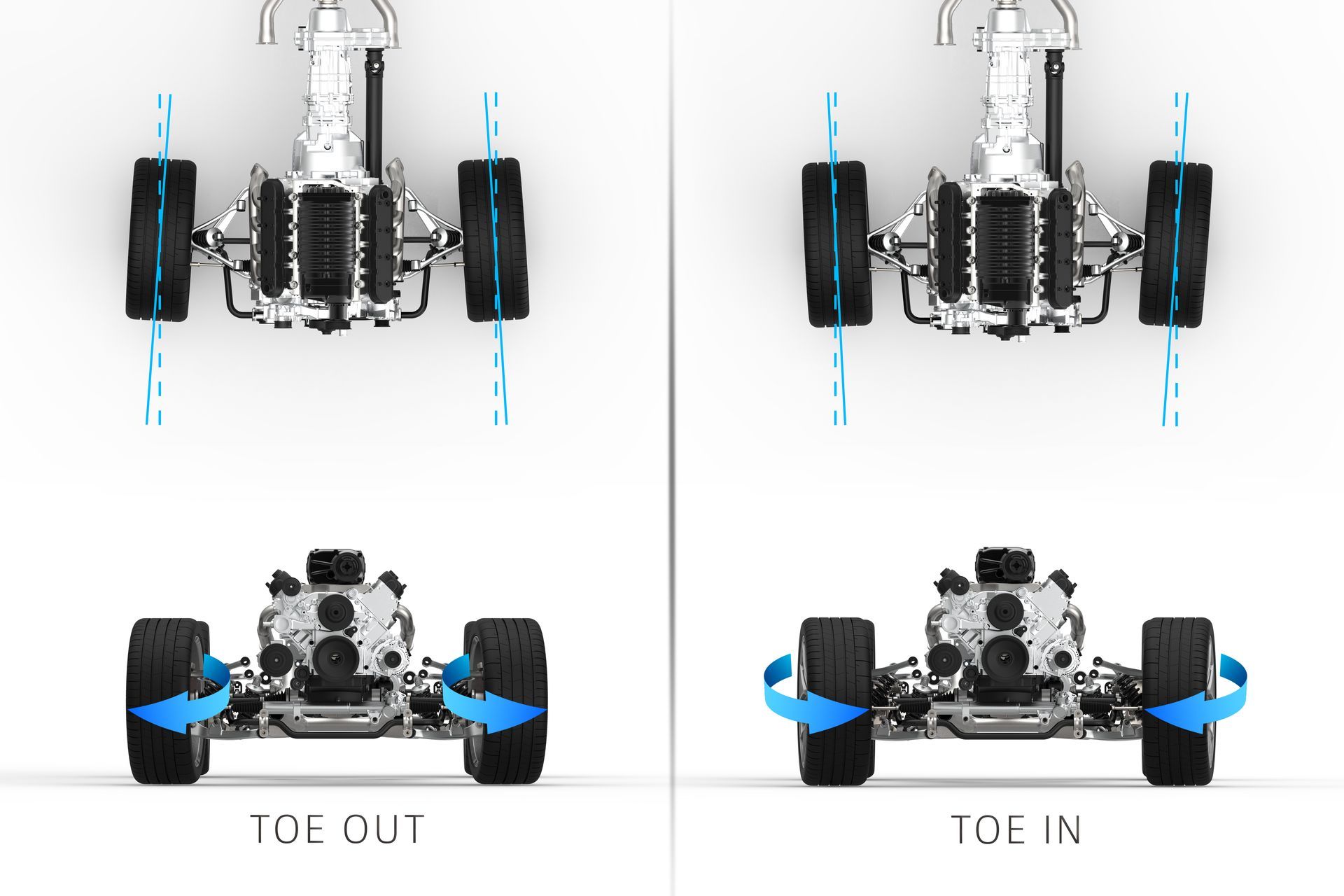
Toe describes whether the tires point slightly inward or outward when viewed from above. Camber describes whether the tops of the tires lean inward or outward. Caster relates to the angle of the steering axis and affects straight-line stability and how the steering returns toward center after a turn.
Toe Is One of the Biggest Causes of Tire Wear
Toe has a major effect on how quickly tires can wear. If the wheels are pointed slightly toward or away from each other instead of rolling in the same direction, the tread is scrubbed sideways as the vehicle moves.
Even a relatively small toe error can create feathered tread blocks or rapid wear across part of the tire. Correcting the toe helps the tires roll in the direction intended instead of constantly fighting against each other. On a four-wheel alignment, technicians measure the relationship between the front and rear toe settings so the vehicle tracks correctly as a complete unit.
Camber Affects Tire Contact With the Road
Camber is the inward or outward tilt of the wheel when viewed from the front of the vehicle. A small amount of camber may be built into the suspension design, but too much positive or negative camber can place excessive load on one side of the tire.
A tire wearing heavily along its inside or outside edge may have a camber concern, although worn suspension components and incorrect toe can produce similar patterns. If camber is outside specification and the vehicle does not provide a factory adjustment, technicians need to look for bent, shifted, or worn parts before deciding how to correct it.
Caster Helps the Vehicle Track Straight
Caster is mainly associated with the front steering system. It affects straight-line stability, steering effort, and the tendency of the steering wheel to return toward center after a turn.
Caster does not usually create the same direct tire wear as incorrect toe, but a large difference from side to side can contribute to pulling or unusual steering feel. Some vehicles allow caster adjustment, while others require damaged or displaced suspension parts to be corrected if the measurement is outside specification.
Why the Rear Wheels Are Important
The rear wheels help establish the vehicle's thrust angle, which is the direction the rear axle is effectively pushing the vehicle down the road. If the rear toe settings are incorrect, the vehicle may travel slightly sideways even though the driver is trying to keep it pointed straight.
That can leave the steering wheel off-center because the front wheels have to compensate for what the rear is doing. On vehicles with adjustable rear suspension, correcting the rear alignment first gives technicians a proper reference for setting the front.
What a Four-Wheel Alignment Can Improve
An accurate alignment can improve several problems when incorrect suspension angles are the actual cause.
You may notice improvement in:
- A vehicle that pulls or drifts
- An off-center steering wheel
- Uneven tire wear
- Steering that feels less stable
- The need for constant steering correction
- Premature wear on new tires
An alignment cannot repair a damaged tire, worn tie rod, loose ball joint, or failing wheel bearing. Those mechanical problems need to be corrected before the alignment can hold properly.
Why Suspension Wear Must Be Checked First
Alignment settings depend on suspension parts staying in a controlled position. If a control arm bushing is badly worn or a tie rod has excessive play, the wheel can move after the alignment has been set.
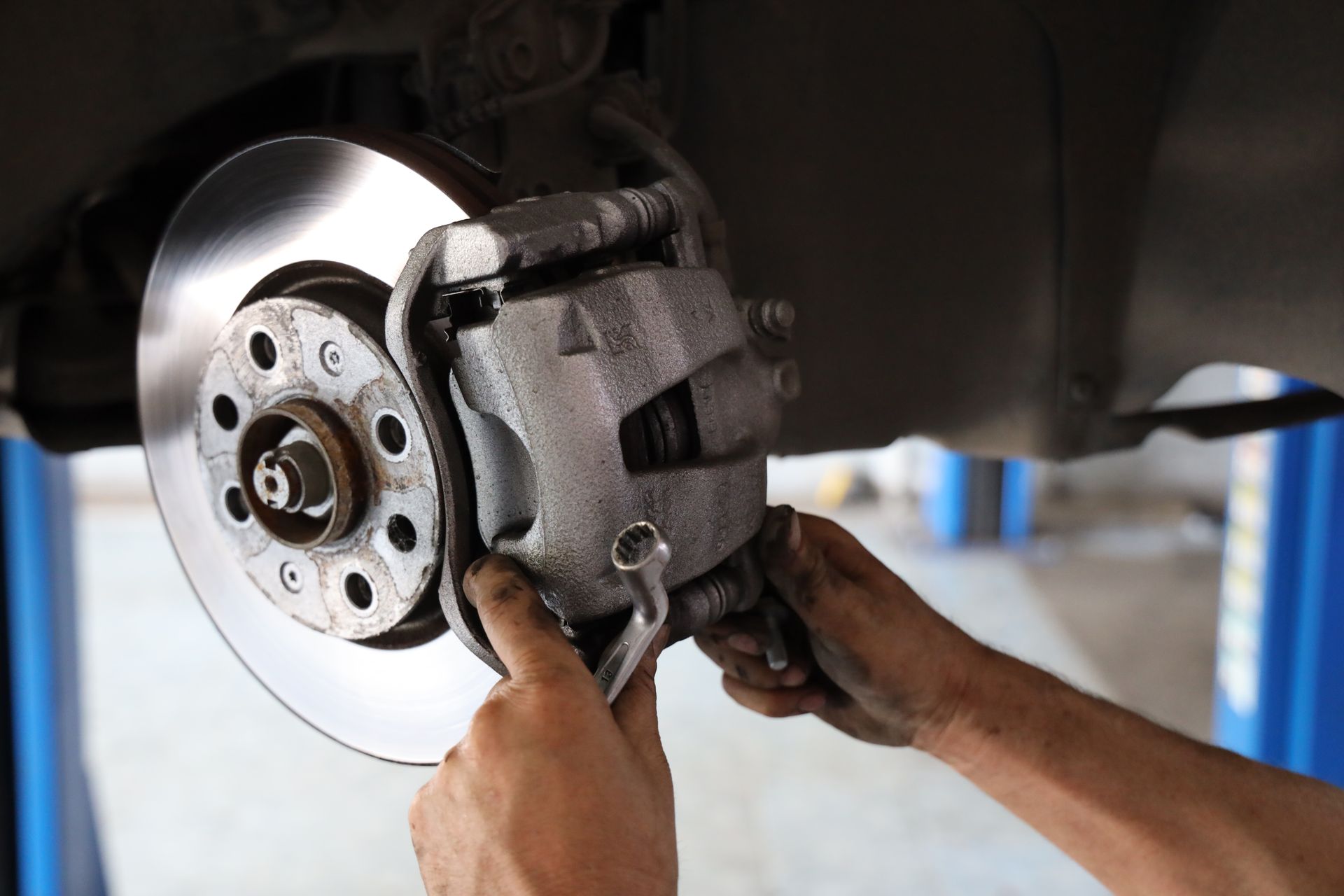
That is why a steering and suspension inspection is an important part of the process when wear is suspected. Technicians may check ball joints, tie rods, control arm bushings, wheel bearings, and other components before making adjustments. Aligning a vehicle with loose parts can produce good numbers on the machine and poor results as soon as the vehicle returns to the road.
When Should You Have a Four-Wheel Alignment Checked?
There is no single mileage interval for every vehicle, but several situations make an alignment check worthwhile. A hard pothole or curb impact can change suspension settings, while worn parts can allow the angles to shift gradually over time.
An alignment should also be considered after certain steering or suspension repairs, when installing new tires after uneven wear, or anytime the steering wheel becomes noticeably off-center. Regular maintenance visits can reveal developing tire wear before the pattern becomes severe enough to shorten tire life.
A Four-Wheel Alignment Does Not Always Mean Every Angle Is Adjustable
One common misunderstanding is that a four-wheel alignment means technicians will adjust every measurement on all four corners. In reality, some vehicles provide only front toe adjustment, while others allow rear toe, camber, caster, or several combinations of those angles.
The alignment process still measures all four wheels so technicians can see how they relate to each other. If a non-adjustable angle is outside specification, that information can point toward worn components, collision damage, a shifted subframe, or another mechanical concern that needs to be addressed separately.
Correct Alignment Helps Protect Your Tires
Tires are one of the larger recurring expenses of vehicle ownership, and incorrect alignment can take usable tread away long before a tire reaches its normal service life.
Maintaining correct tire pressure, rotating the tires when appropriate, and correcting alignment problems all work together. An alignment cannot reverse existing wear, but it can help prevent a new set of tires from developing the same pattern that damaged the previous ones.
Get Four-Wheel Alignment in Conroe and New Waverly, TX, With Barsh Auto
Barsh Auto serves drivers in Conroe and New Waverly, TX, with wheel alignment and steering and suspension service.
If your vehicle is pulling, wearing tires unevenly, or has a steering wheel that no longer sits straight,
contact
Barsh Auto to schedule an alignment inspection and determine what needs to be corrected.